From Coin-Operated Levers to Networked Reels: Milestones That Defined Slot Machine Development
Olivia Richter · Sep 16, 2026
From Coin-Operated Levers to Networked Reels: Milestones That Defined Slot Machine Development
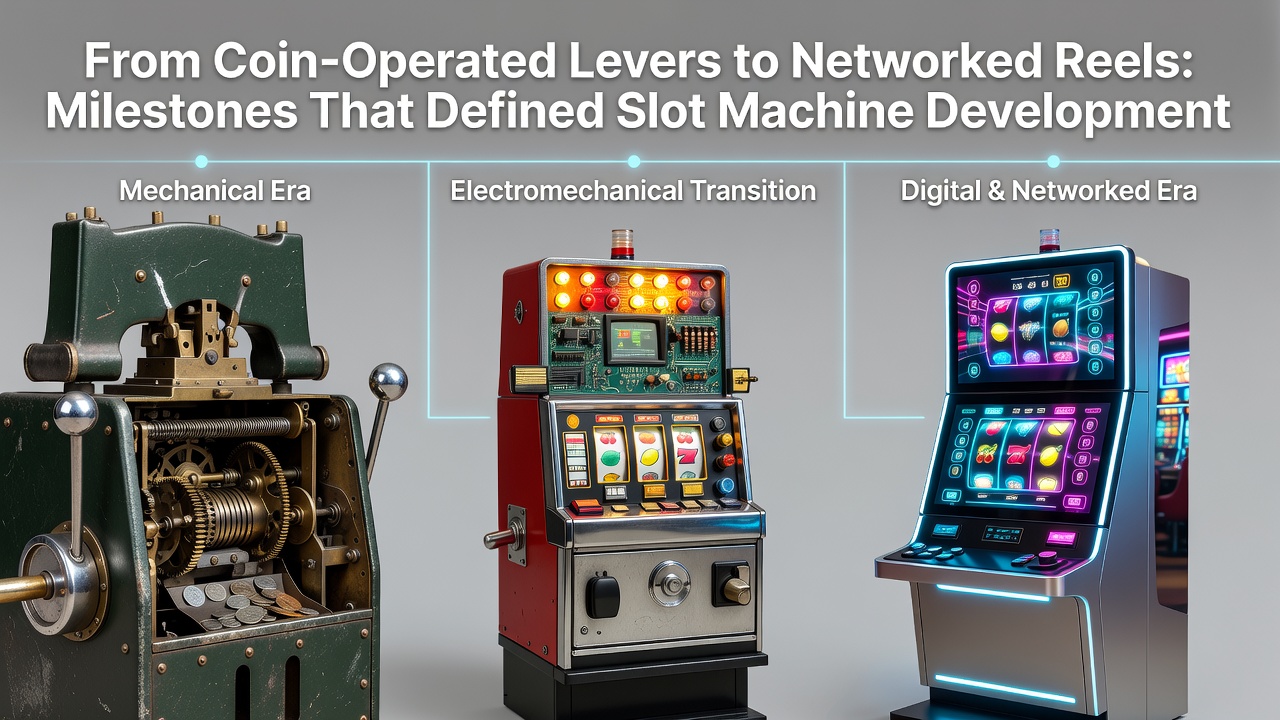
The development of slot machines began in the late 19th century with purely mechanical inventions that relied on physical reels and coin mechanisms, yet the path from those basic devices to today's networked systems involved repeated technological leaps that reshaped how games operated and connected players across locations.
Mechanical Foundations in the 1890s
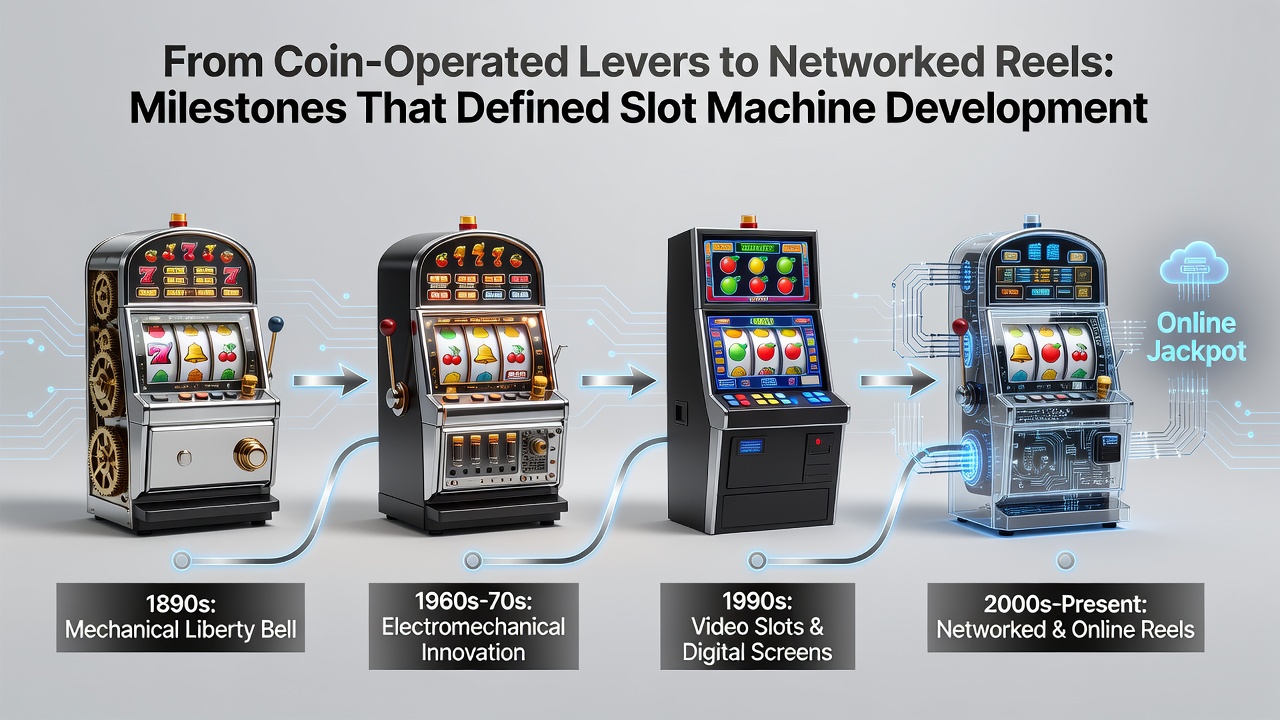
Charles Fey constructed the Liberty Bell machine in 1895 in San Francisco, and this device introduced three spinning reels along with automatic coin payouts for winning combinations such as three bells in a row, while earlier machines had required manual intervention by operators to award prizes. The design spread quickly through saloons and establishments because it combined simple levers with reliable payout systems, and observers note that these early units operated without electricity yet established core principles of random symbol alignment that later generations would refine.
Electromechanical Advances in the Mid-20th Century
By the 1960s manufacturers introduced electric motors to replace hand-cranked reels, and Bally's 1963 Money Honey model became one of the first to feature a bottomless hopper that held thousands of coins for automatic payouts without frequent attendant visits. These machines still used physical reels but added solenoids and switches that allowed faster spin cycles, and data from Nevada Gaming Control Board records show that electromechanical units accounted for the majority of casino floor installations through the 1970s because they offered higher reliability and larger jackpots than their mechanical predecessors.
Video Screens and Random Number Generators
Fortune Coin Company placed the first video slot machine in a Las Vegas casino in 1976, replacing physical reels with a cathode-ray tube display that simulated spinning symbols, and this shift allowed game developers to create more symbols and bonus features without mechanical limitations. Random number generators soon replaced gear-driven randomness, running on microprocessors that produced outcomes thousands of times per second, while researchers at institutions such as the University of Nevada documented how these algorithms maintained consistent payout percentages across millions of plays. The transition reduced wear on moving parts and enabled multi-line betting formats that increased player engagement per spin.
Networked Progressives and Wide-Area Systems
The Megabucks progressive jackpot network launched in Nevada during 1986 and linked multiple machines across different casinos to a shared prize pool that grew with each bet placed, and this innovation turned single-site jackpots into regional events that sometimes exceeded several million dollars. Similar wide-area systems appeared in other jurisdictions, including Australian state lotteries that connected venues through centralized servers, while industry reports indicate that progressive linkages increased average bet sizes because visible jackpot counters created shared excitement among players in separate locations. By the early 2000s these networks had expanded to include video poker and multi-game terminals, and operators could adjust contribution rates remotely through secure data connections.
Online Platforms and Mobile Integration
Internet-based slot games emerged in the mid-1990s following the first regulated online casinos, and these titles used the same random number generator technology but delivered results through web browsers rather than physical cabinets. Mobile compatibility arrived with smartphone operating systems in the late 2000s, allowing players to access identical game libraries on handheld devices, and figures from the European Gaming and Betting Association reveal steady growth in remote gaming participation across multiple markets. Server-based gaming further enabled operators to update game content or jackpot parameters without physical cabinet swaps, shortening deployment cycles from weeks to hours.
Current Developments Entering 2026
Leading manufacturers now deploy cloud-connected reels that support real-time tournament modes and personalized bonus triggers based on player behavior data, while maintaining strict separation between outcome generation and promotional features to satisfy regulatory standards. In September 2026 several North American and European jurisdictions plan synchronized launches of skill-influenced slot hybrids that combine traditional reels with player-choice elements, yet core random number generator certification remains unchanged. These updates reflect ongoing integration of networking infrastructure that began decades earlier with simple progressive links and now encompasses cross-border player pools under licensed frameworks.
Conclusion
Each milestone from the Liberty Bell's mechanical reels to contemporary server-linked terminals built upon prior engineering solutions while introducing new capabilities that expanded both scale and complexity. Regulatory bodies in multiple regions continue to certify hardware and software components to ensure consistent fairness, and the cumulative effect has produced an industry segment where physical and digital formats coexist within unified networks.